Easy French Macaron Recipe – Perfect Every Time
French macarons are more than just a dessert; they are tiny, edible works of art. Mastering the French macaron recipe can seem daunting, conjuring images of airy, delicate shells with a perfectly chewy interior and a luscious filling. But trust me, with a little patience and the right guidance, you too can create these exquisite confections that have captivated palates worldwide. What is it about the French macaron that makes us swoon? It’s the sublime contrast of textures: the crisp exterior giving way to a yielding, almost cloud-like center. It’s the vibrant colors, the endless flavor possibilities, and the sheer elegance they bring to any occasion. These delicate almond meringue cookies, sandwiched with ganache or buttercream, are a true testament to the magic of simple ingredients transformed into something extraordinary. Embarking on your own French macaron recipe journey is an adventure in precision and flavor, and I’m thrilled to guide you every step of the way.
French Macaron Recipe
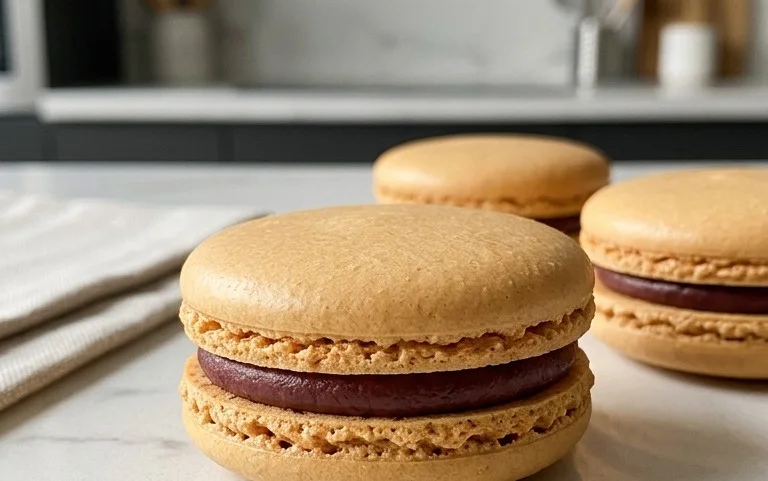
Ah, the French macaron. These delicate, jewel-like confections are the stuff of pastry dreams. Often perceived as intimidating, I promise you, with a little patience and a lot of love, you can master the art of the macaron. The key lies in understanding the science behind these temperamental treats. We’re aiming for that signature smooth, glossy shell, the tell-tnon-alcoholic ale “feet” around the base, and a satisfying chewy interior that gives way to a delightful filling.
This recipe is designed to guide you through each step, demystifying the process and empowering you to create your own stunning macarons at home. Don’t be discouraged by your first attempt; like any skill, macaron-making benefits from practice. So, let’s get started on this delicious journey!
Ingredients:
Instructions:
Preparing the Dry Ingredients
The foundation of a great macaron shell is a meticulously prepared dry ingredient mix. This is where we begin extract. In a medium bowl, combine the sifted super-fine almond flour, powdered sugar, and salt. Whisk them together thoroughly to ensure they are evenly distributed. If your almond flour isn’t super-fine, you can pulse it in a food processor for a few seconds, being careful not to over-process it into a paste. Sifting is crucial; it removes any lumps and ensures a smooth batter, which directly translates to smooth macaron shells. I like to sift at least twice, sometimes even three times, just to be absolutely sure.
Making the Meringue
Now, for the heart of the macaron: the meringue. In a clean, grease-free bowl of a stand mixer (or a large bowl if using a hand mixer), add your room-temperature egg whites. Ensure there’s absolutely no trace of yolk in the whites, as fat is the enemy of a stable meringue. Start whisking on medium-low speed until foamy. Gradually increase the speed to medium-high. Once the egg whites reach a soft peak stage (they hold their shape but the peaks curl over), slowly begin extract adding the granulated sugar, a tablespoon at a time, while the mixer is running. Continue to beat until you achieve stiff, glossy peaks. This means when you lift the whisk, the meringue stands straight up and doesn’t droop. This stage can take anywhere from 5 to 10 minutes, depending on your mixer.
Adding Color and Flavor
Once your meringue is perfectly stiff, it’s time to add that beautiful color and the subtle hint of vanilla. Add the liquid-gel food coloring and pure vanilla extract to the meringue. If you’re using gel food coloring, start with the recommended amount and then add more, a drop at a time, until you achieve your desired hue. Remember, the color will deepen slightly as the macarons bake. Gently fold these ingredients into the meringue using a rubber spatula until just combined. Overmixing at this stage can deflate your beautiful meringue.
Macaronage: The Art of Folding
This is perhaps the most critical step, known as “macaronage.” It’s the process of folding the dry ingredients into the meringue to create the perfect batter consistency. Add about one-third of your sifted dry ingredients to the meringue. Gently fold them in using a spatula, scraping down the sides of the bowl and then folding the batter over itself. Repeat with the remaining dry ingredients, adding them in two more batches. The goal is to achieve a batter that flows like lava. You should be able to draw a figure-eight with the batter, and it should slowly melt back into itself within about 20-30 seconds. If the batter is too stiff, your macarons will have peaks; if it’s too runny, they’ll spread too much. This step requires practice and feel, so don’t be afraid to test the consistency.
Piping and Resting
Preheat your oven to 300°F (150°C). Line two baking sheets with parchment paper or silicone baking mats. Fit a piping bag with a round tip (about 1/2 inch in diameter). Carefully fill the piping bag with your macaron batter. Hold the piping bag directly over the baking sheet, perpendicular to the surface, and pipe small rounds (about 1 to 1.5 inches in diameter), leaving about 1 inch of space between each one. As you pipe, try to stop applying pressure gradually to create a smooth, rounded top. Once you’ve piped a full sheet, firmly tap the baking sheet on your countertop several times. This helps to release any trapped air bubbles, which can cause hollow macarons, and also helps to flatten the piped batter slightly. After tapping, let the piped macarons rest at room temperature for at least 30 minutes, or until a skin forms on the surface. You should be able to gently touch a macaron without any batter sticking to your finger. This skin is essential for developing the signature “feet.”
Baking Your Macarons
Place one baking sheet at a time in the preheated oven. Bake for 12-15 minutes, or until the macarons have developed their “feet” and the shells are firm to the touch. They should not wobble when gently nudged. Ovens can vary, so keep an eye on them. If they start to brown too quickly, you can loosely tent them with aluminum foil. Once baked, carefully slide the parchment paper or silicone mat onto a wire rack and let the macarons cool completely on the sheet before attempting to remove them. Gently peel them off once they are fully cooled. If they stick, they may need a few more minutes in the oven or are not quite ready.
Filling and Maturing
Once your macaron shells are completely cool, it’s time for the best part: filling! Pair up your shells by size. Pipe a dollop of your chosen filling, such as vanilla buttercream, onto the flat side of one shell. Then, gently sandwich it with another shell, twisting slightly to spread the filling to the edges. Finally, the most crucial step for achieving that perfect macaron texture: maturation. Place the filled macarons in an airtight container in the refrigerator for at least 24 hours, and ideally 48 hours. This allows the filling to soften the shells from the inside out, creating that irresistible chewy texture. After their chilling period, let them come to room temperature for about 15-20 minutes before enjoying.
Notes:
** Food Coloring: Liquid-gel food coloring is recommended because it provides vibrant color without adding excess moisture to the batter, which could affect the texture. Start with a small amount and add more gradually until you achieve your desired shade.
Conclusion:
I hope you feel inspired and ready to conquer the art of the French macaron! This recipe is a fantastic gateway into creating these delicate, melt-in-your-mouth cookies at home. The beauty of macarons lies in their elegant simplicity and the endless possibilities for flavor and color. They’re perfect for special occasions, thoughtful homemade gifts, or simply treating yourself to something truly delightful. Don’t be discouraged if your first batch isn’t absolutely perfect; mastering the French macaron takes a little practice, but the reward is so worth it!
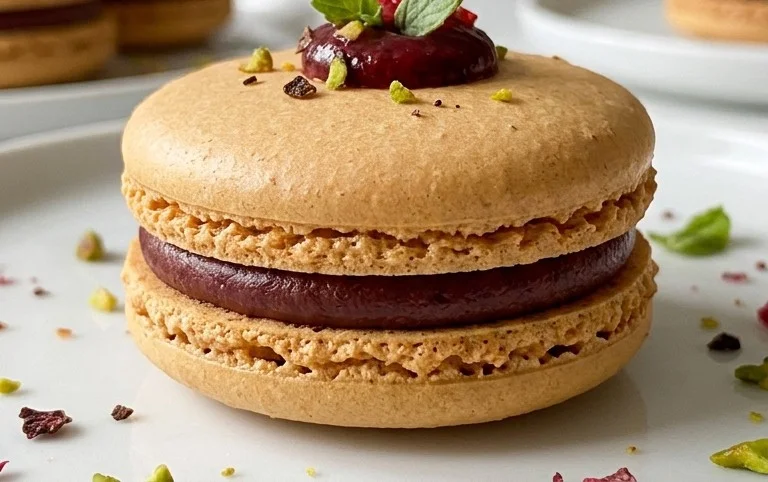
Serving these little gems is a joy. They look stunning arranged on a dessert platter alongside other pastries or enjoyed simply with a cup of tea or coffee. For variations, consider infusing your buttercream with different extracts like lavender or rose, or even adding finely chopped nuts or chocolate chips to the filling. The world of French macaron flavors is vast and exciting!
So, gather your ingredients, take a deep breath, and dive in. You’ve got this! I encourage you to try this French macaron recipe and discover the magic for yourself.
Frequently Asked Questions:
Why are my macarons cracked?
Cracked macaron shells are often caused by oven temperature being too high, not resting the piped shells long enough before baking to form a skin, or overbeating the meringue, leading to too much air trapped within the batter.
My macarons are hollow inside. What went wrong?
Hollow macarons can be a tricky issue! It often points to an undercooked cookie, where the shell hasn’t fully developed before the filling sets. It can also be related to an unstable meringue or improper macaronage (overmixing the batter).
How can I get a smooth macaron shell?
Achieving a smooth shell requires a few key steps. Ensure your almond flour is very finely ground and sifted thoroughly. Proper macaronage, where you achieve a lava-like consistency without overmixing, is crucial for a smooth surface. Also, resting the piped macarons until a dry skin forms before baking helps prevent cracks and promotes a smooth dome.
French Macaron Recipe
A classic recipe for making delicate and delicious French macarons.
Ingredients
-
150 grams sifted super-fine almond flour
-
180 grams powdered sugar
-
1/4 teaspoon salt
-
120 grams large egg whites (at room temperature)
-
60 grams granulated sugar
-
4 drops liquid-gel food coloring
-
1 teaspoon pure vanilla extract
-
Vanilla Buttercream Frosting or your choice of filling
Instructions
-
Step 1
Combine sifted almond flour and powdered sugar in a food processor and pulse a few times to break up any lumps. Sift this mixture into a large bowl to ensure a fine texture. Whisk in the salt. -
Step 2
In a separate, very clean bowl, whisk the egg whites until frothy. Gradually add the granulated sugar while whisking continuously until stiff, glossy peaks form (meringue). -
Step 3
Add the food coloring and vanilla extract to the meringue and gently fold them in until evenly distributed. The mixture should be smooth and have a ribbon-like consistency when the whisk is lifted. -
Step 4
Fold the almond flour and powdered sugar mixture into the meringue in two additions, using a spatula. Continue folding until the batter flows like lava and forms a ‘figure 8’ when drizzled. Be careful not to overmix. -
Step 5
Transfer the batter to a piping bag fitted with a round tip. Pipe small rounds onto baking sheets lined with parchment paper or silicone mats, leaving space between each macaron. -
Step 6
Tap the baking sheets firmly on the counter a few times to release any air bubbles. Let the piped macarons sit at room temperature for about 30-60 minutes, or until a skin forms on the surface. -
Step 7
Preheat your oven to 300°F (150°C). Bake the macarons for 15-20 minutes, or until the edges are set and the feet have formed. They should lift easily off the parchment. -
Step 8
Allow the macarons to cool completely on the baking sheets before removing them. Once cooled, pair matching macaron shells and fill with your chosen frosting or filling.
Important Information
Nutrition Facts (Per Serving)
It is important to consider this information as approximate and not to use it as definitive health advice.
Allergy Information
Please check ingredients for potential allergens and consult a health professional if in doubt.